

Underwater Flight
On countershading, gait adaptations, and imposters

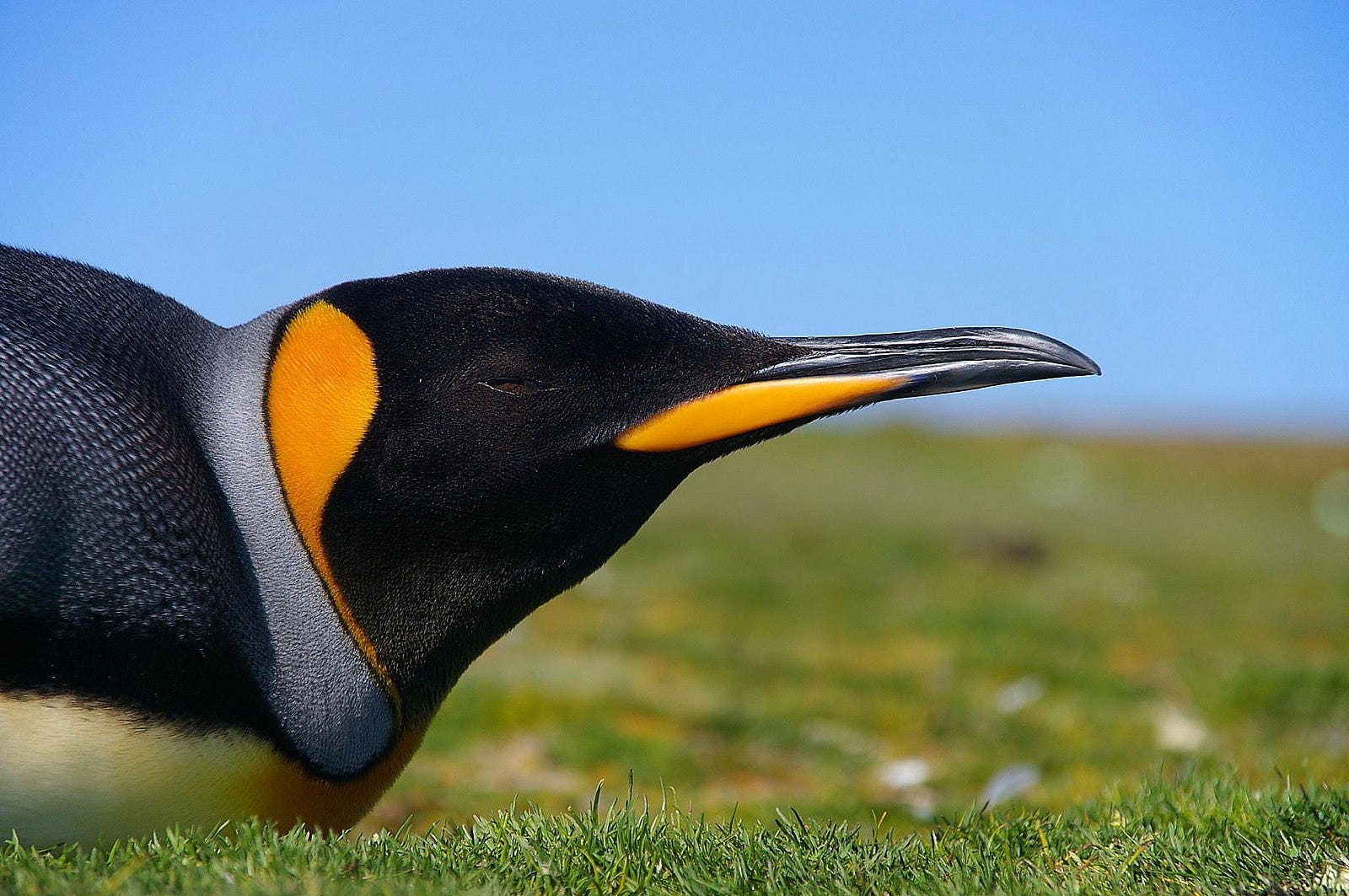
Have you ever wondered how penguins propel themselves up and out of the water? Or why penguins and orcas both evolved the same colouration?

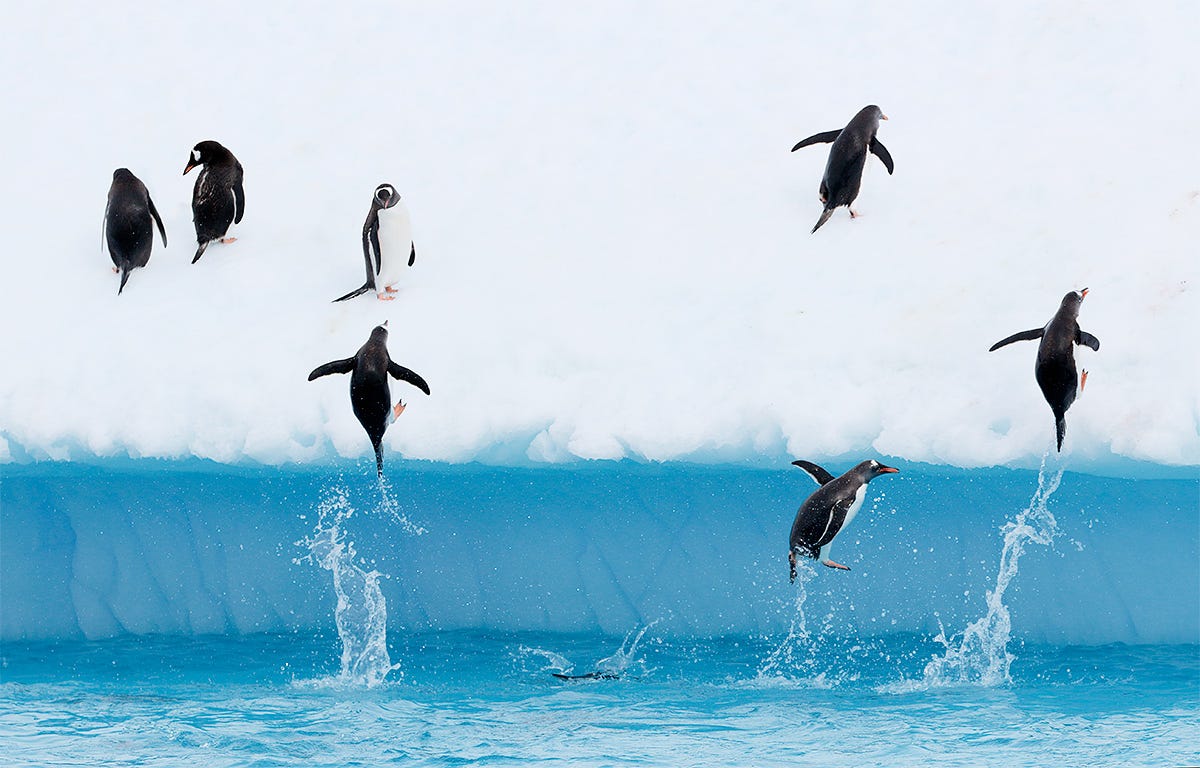
Penguins’ feathers can trap air, which the penguin can then release as needed in a stream of bubbles behind them. This helps to propel them forwards or upwards. It also gives them the momentum to shoot out of the water upwards and onto land, which helps them evade predators as they exit the water.

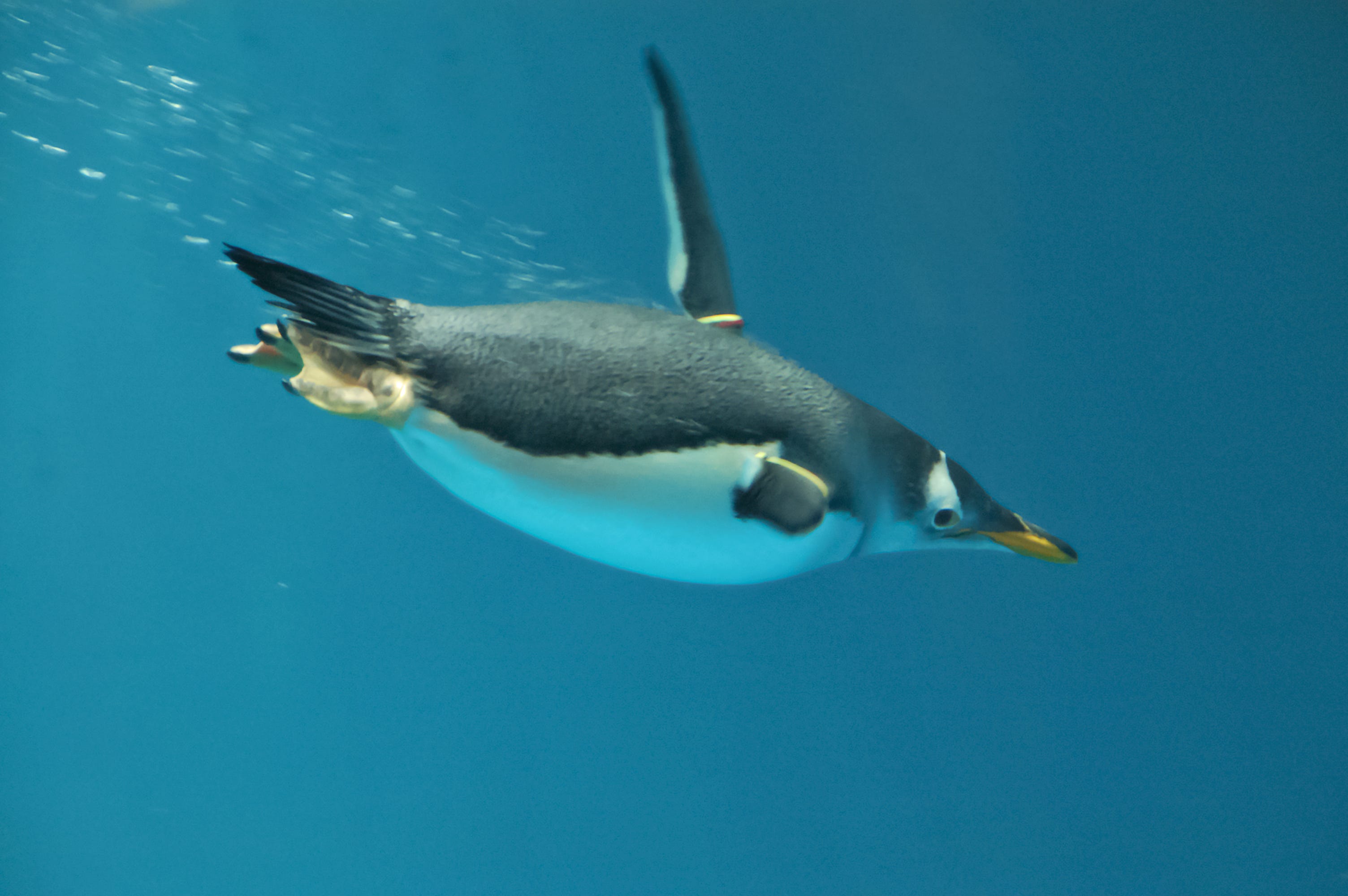
Penguins’ iconic black and white colouring is known as ‘countershading’ - this refers to a pattern of colouration which is darker on the part of the body facing the sun (the penguins’ backs), and lighter on the part facing away from it (their bellies). Their white bellies mean that, from underneath, they’re hard to distinguish from the floating sea-ice that surrounds them. They also blend in better with the lighter ocean surface when seen from below, but blend in better with the dark ocean depths when viewed by any predators above them. Their black backs also absorb light from the sun above, to help warm them up in the cold water. You can see other examples of countershading in orcas, sharks, stingrays and reef fish.

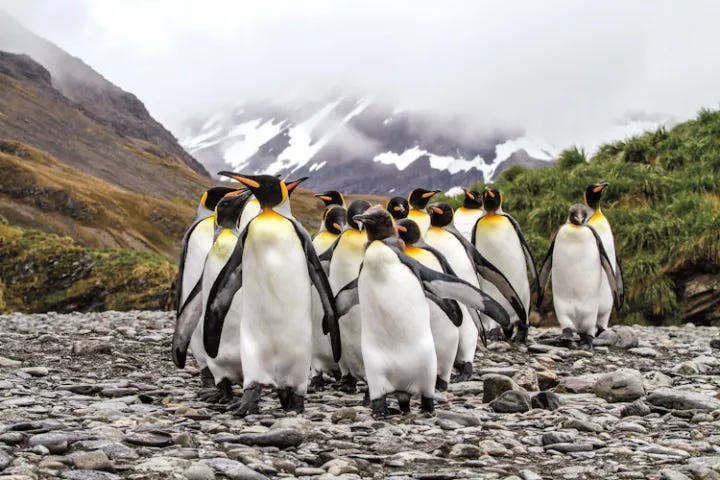
Waddling side-to-side is actually the most efficient way for penguins to walk with their unusual body configuration - this is due to their short legs needing to store a lot of energy, which they use to push off for their next step. Despite this gait adaptation, they still use twice as much energy as other similarly-sized animals when walking. And some species still walk 60 miles across icy landscapes to reach their nesting grounds.

(This one is recycled from day 7 of my daily fact notes).
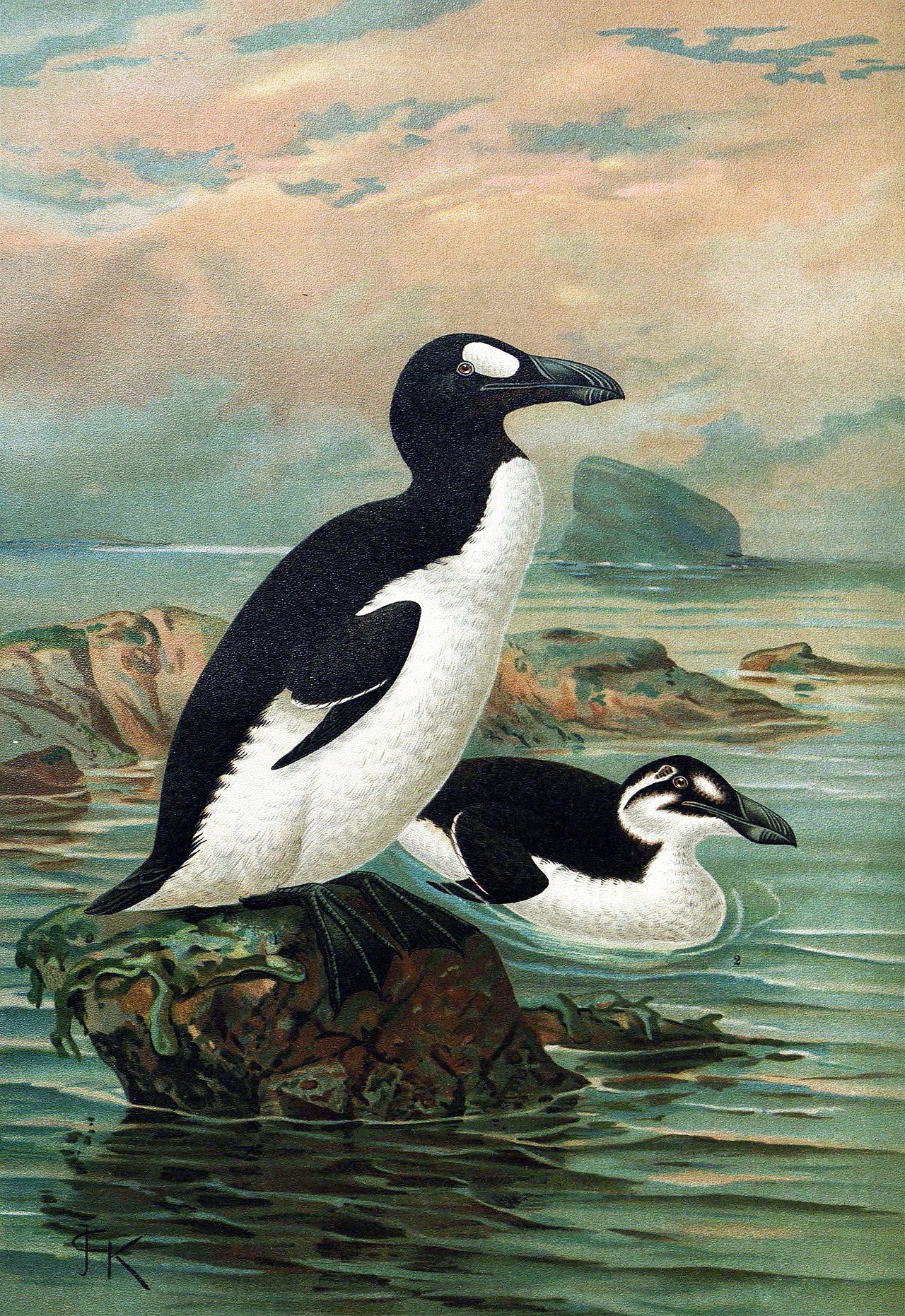
Penguins are named after a now-extinct bird called Penguinis Impennis, or the ‘Great Auk’ - flightless birds that once lived in the Northern Hemisphere, and had the familiar black plume and white belly, with seasonal white spots on their faces. (Their name came from the Welsh phrase “pen gwyn,” meaning “white head”).
When Europeans encountered penguins in the Southern Hemisphere for the first time, they saw the resemblance and used the same name. However - modern penguins and Penguinis Impennis weren’t actually the same species; the latter was actually a Garefowl. So technically - penguins are imposters!

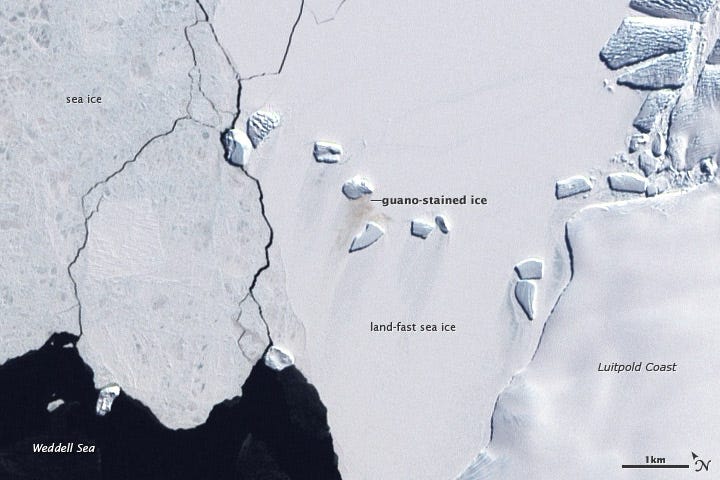
Known as ‘guano’, their poop can be seen from space. They nest in large colonies, resulting in large accumulations of guano - which stains the contrasting ice and snow. This actually allows researchers to track penguin colonies using satellite imagery.

Anyone can contribute to penguin conservation by counting penguins on time-lapse cameras, in collaboration with the British Antarctic Survey. This is via the Penguin Watch project from Zooniverse.
https://www.zooniverse.org/projects/penguintom79/penguin-watch
Text: © Jennifer McBride 2025 (Paperfly)
(Image 1 by Ben Tubby, 2007. Image 2 by Arthur Morris, 2015. Image 3 by Ken Funakoshi, 2008. Image 4 by the Smithsonian. Image 5 is by John Gerrard Keulemans, showing the extinct Great Auks, pre-1903. Image 6 by NASA)
This is fabulous, I met lots of penguins in Antarctica and I never knew they were imposters. I didn’t know the guano fact either but having encountered it I’m not surprised. Thanks for sharing.
Well - I have always loved Penguins (surely everyone does!), so I found this fascinating. Lovely photos too!
Best Wishes - Dave :)